Vancouver Home Builder Considerations for Custom Home Clients
A custom home in Vancouver is rarely just a construction project. It is a negotiation between land value, architecture, municipal process, climate, neighbourhood character, family habits, long-term upkeep, and the private standards of the owner. The finished residence may look effortless from the street, but the decisions behind it are layered and consequential. For clients investing at the luxury end of the market, choosing a Vancouver home builder is less about finding someone who can “build a house” and more about identifying the right professional structure for a complex, high-value undertaking.
Vancouver brings its own pressures. Lots can be tight. Mature trees, views, slopes, drainage conditions, older housing stock, and established streetscapes all influence what is possible. Some homes require custom home renovations rather than new construction. Others involve heritage restorations where character, craft, and regulatory expectations matter as much as floor area. In some cases, clients are evaluating a builder who also works with a real estate developer, property maintenance division, or multi-Family building maintenance team. Those adjacent capabilities can be useful, but they should be understood clearly.
The most refined homes come from disciplined decisions made early, not from expensive corrections made late. Before interviewing custom home builders in Vancouver BC, clients benefit from knowing what to look for, what questions to ask, and where the trade-offs usually appear.
The Vancouver custom home is a special category
A custom residence is not a product pulled from a catalogue. It is a one-off response to a particular owner, property, budget, and approval path. That sounds obvious, yet many disappointments begin when clients treat custom building as if it were a more expensive version of standard construction. It is not. A luxury custom home requires interpretation, coordination, and a steady hand through uncertainty.
The word “custom” itself can mean several things. For one owner, it means a newly built home designed from first principles with an architect, interior designer, landscape consultant, and builder collaborating from the start. For another, it means a substantial renovation of an existing residence where structure, services, windows, interiors, and outdoor living are reworked without losing the original character. For a third, it may mean a heritage home restored with period-sensitive millwork, envelope upgrades, and modern mechanical systems hidden behind walls that were never designed for them.
These are different assignments. The team that excels at one may not be the best fit for another. Industry categories also matter. A custom home builder and a multi-family home builder are commonly treated as distinct disciplines, even though some firms work across both. A company experienced in multi-Family building maintenance may understand envelope durability and long-term repairs, but that does not automatically prove skill in luxury residential detailing. A heritage restoration specialist may be exceptional with historic fabric, millwork, and masonry, yet may not operate as a full-service new-home builder. A real estate developer may understand land, feasibility, and approvals, but client-led custom work requires a different temperament than speculative development.
The careful client does not assume these capabilities are interchangeable. They ask for clarity.
Start with the nature of the project, not the name on the door
Many owners begin by searching for a well-known Vancouver home builder or asking friends which firm built a beautiful house nearby. Reputation matters, but project fit matters more. A builder’s portfolio may be impressive while still being poorly aligned with the realities of a particular property.
A steep site with complicated access is not the same as a flat teardown in a familiar neighbourhood. A 1912 character house with original trim, old-growth framing, and settling foundations is not the same as a late-1980s renovation candidate. A waterfront or view property may carry a different burden of waterproofing, glass performance, structural engineering, privacy planning, and exterior durability. A home intended for quiet retirement has different operational demands than one designed for entertaining, staff support, extended family, or frequent guests.
Luxury clients often have strong aesthetic expectations. That is natural. The danger is letting finishes dominate the early conversation. Stone slabs, bronze hardware, custom staircases, and imported lighting are seductive, but the success of the home rests first on site planning, structure, building envelope, mechanical design, and coordination. In Vancouver’s coastal climate, the unseen layers matter. Flashing, roof transitions, drainage planes, waterproofing, ventilation, and humidity control are not glamorous subjects at a dinner table, yet they protect the investment every day.
A good builder welcomes these conversations. A weak one rushes past them.
Credentials are useful, but evidence is better
No client should hire on charm alone. At the high end of the market, presentations can be polished. The office may be handsome. The language may be fluent. What matters is demonstrated competence under conditions similar to yours.
Ask to see completed work that reflects the same level of complexity, not merely the same price range. If your project involves custom home renovations, look for evidence of careful phasing, temporary protection, structural interventions, and sensitive integration between old and new work. If your property requires heritage restorations, ask how the builder or restoration partner approaches preservation, millwork, historic materials, building repair, and historically appropriate renovation. If your home will include challenging exterior assemblies, look closely at envelope experience, not just interior photographs.
There are firms in the broader market that specialize in old and historic homes and buildings, including preservation, restoration, millwork, general contracting, and repair. Others concentrate on historically appropriate restoration or renovation for residences and civic buildings, with attention to building envelope work, surface restoration, and specialty restoration. Still others focus on exterior restoration, waterproofing, structural repairs, masonry or façade restoration, roofing maintenance, and concrete repairs across residential, commercial, and institutional properties. Those specialties are valuable, but they are not identical to being a custom home builder. The distinction matters when assembling the project team.
If a company presents itself as capable across several fields, such as property maintenance, development, renovation, heritage restoration, and multi-family service, ask how those divisions actually operate. Shared branding does not necessarily mean shared supervision, shared trades, or shared quality control. It may, but the client should verify it rather than infer it.
A concise way to test fit is to ask for specifics rather than general assurances:
- Which completed projects most closely resemble this one in scope, age, site conditions, and finish level?
- Who supervised those projects day to day, and will that person be involved here?
- Which work is self-performed, which is subcontracted, and how are trade partners selected?
- How are changes priced, documented, approved, and scheduled?
- What building envelope, waterproofing, or maintenance lessons have shaped the firm’s current practice?
Those questions are not hostile. They are professional. A serious builder will recognize them as signs of a serious client.
The best luxury work is planned before it is priced
Budget conversations in custom residential construction can feel uncomfortable, particularly when owners value discretion. Yet avoiding the subject early usually creates more discomfort later. A luxury budget is not a blank cheque. It is a framework for priorities.
In Vancouver luxury home renovations and new custom builds, cost is shaped by more than square footage. Access, excavation, structural complexity, window packages, mechanical systems, seismic upgrades, envelope requirements, millwork density, stone selection, appliance packages, exterior living areas, landscaping, and schedule all matter. Two homes of similar size can carry very different costs because one is simple to build and the other is a sequence of custom home builder bespoke details.
Pre-construction service is where a capable builder earns trust. Before a shovel touches soil or a demolition crew opens walls, the builder should be helping the design team test details against budget and buildability. That includes early input on structural assumptions, lead times, site logistics, temporary works, risk areas, and sequencing. The purpose is not to suppress design ambition. It is to protect it from avoidable shocks.
There is an old pattern in custom work: drawings progress beautifully, pricing arrives late, the budget breaks, and everyone spends months redesigning under pressure. Experienced clients try to avoid that rhythm. property maintenance They bring the builder into the conversation early enough to provide reality checks while design choices are still flexible. The best builders do not merely price what they are given. They help the owner understand the consequences of the choices being made.
For example, a deeply recessed window detail may look exquisite, but it can complicate waterproofing, increase labour, and require careful coordination between framing, envelope, cladding, and interior finish trades. A large sliding door system can transform a living room, but it demands structural support, drainage planning, threshold detailing, and realistic lead-time management. A wine room below grade can be a jewel box, or it can become a humidity and waterproofing problem if treated as decorative rather than technical.
Luxury is not excess. Luxury is control.
Renovation brings a different kind of uncertainty
Custom home renovations often require more judgment than new construction. With a new build, uncertainty remains, especially in excavation and approvals, but the structure is designed from the beginning around current expectations. In a renovation, the house reveals itself in stages. Walls conceal past work. Foundations may be irregular. Earlier renovations may have removed structure, altered drainage, or buried problems behind attractive finishes.
This is where experience shows. A builder accustomed only to clean new-build conditions may struggle when a renovation demands diagnosis. The first walk-through should not be theatrical. It should be observant. Are floors out of level? Is there evidence of moisture at the base of walls? Are rooflines complex? Has the basement been lowered? Do windows suggest repeated replacement without proper envelope correction? Is the electrical service suitable for the proposed mechanical and appliance loads? Are there signs that previous owners renovated for appearance rather than durability?
A careful renovation builder will recommend investigation before committing to false precision. Selective demolition, structural review, hazardous material assessment where appropriate, and exploratory openings can save money by replacing guesswork with information. Clients sometimes resist this early spending because it does not produce visible beauty. Yet a modest amount of investigation can prevent a major mid-project surprise.
In luxury renovations, the emotional dimension also matters. Owners may be living in the home before work begins. They may have attachment to certain rooms, trees, views, or inherited details. A good builder respects those attachments while still explaining what must change. If a staircase cannot be preserved safely, the owner deserves to know early. If original millwork can be removed, repaired, and reinstalled, that may influence both budget and design. If a beloved exterior wall assembly is failing, cosmetic patching is rarely a kindness.
Heritage work rewards restraint
Heritage restorations require a particular temperament. The goal is not simply to make an old building look new. Often the highest compliment is that the work feels inevitable, as if the home has been cared for across generations rather than aggressively remade in one season.
That demands patience with materials, proportions, and craft. Original mouldings may not match modern profiles. Windows, doors, and exterior details may involve regulatory or neighbourhood expectations. Masonry, plaster, timber, and historic surfaces can behave differently from modern assemblies. Waterproofing and insulation upgrades need careful thought because introducing modern performance standards into old walls can create unintended moisture issues if handled bluntly.
Clients should be honest about what they want from heritage work. Some want faithful preservation. Others want a respectful exterior with a highly contemporary interior. Some want original materials retained wherever possible, while others value the character but expect modern comfort throughout. None of these positions is inherently wrong, but the team must understand the target.
Specialist input is often warranted. Firms that focus on preservation, historically appropriate restoration, building envelope work, surface restoration, millwork, or old-building repair can bring knowledge that a general custom builder may not hold internally. The key is coordination. A beautiful restoration detail can fail if it is not integrated with structure, moisture control, schedule, and the rest of the construction process.
The most successful heritage projects I have seen share a quiet discipline: nobody treats the old house as an obstacle. They treat it as the client.
Maintenance thinking belongs in the design phase
The phrase property maintenance may sound far removed from luxury design, but sophisticated owners should welcome maintenance thinking. A home that is expensive to build and difficult to maintain is not refined. It is fragile.
Vancouver’s rain, shade, vegetation, and freeze-thaw cycles in some conditions can be hard on exterior materials. Flat roof areas, decks over living space, concealed gutters, complicated wall transitions, and heavy landscaping near building assemblies require thoughtful access and future service planning. The owner should ask not only how the home will look on move-in day, but how it will be inspected, cleaned, adjusted, and repaired five or ten years later.
This is where experience from building repair, exterior restoration, waterproofing maintenance, roofing, façade work, and concrete repairs can inform better decisions. It does not mean a maintenance company should automatically build the home. It means the builder and design team should think like stewards, not just creators.
Consider a few deceptively simple questions. Can gutters be reached safely? Can mechanical filters be changed without dismantling millwork? Are exterior drains accessible for cleaning? Are planters isolated properly from the building envelope? Can large-format stone be replaced if one piece cracks? Are specialty finishes documented so future repairs do not become detective work?
In multi-residential work, maintenance planning is often more formal because building owners and strata councils understand lifecycle costs. Some lessons from multi-Family building maintenance translate well to private luxury homes. Clear access, durable assemblies, documentation, and scheduled inspections protect value. A private home may not have a council reviewing budgets, but it still benefits from disciplined asset care.
Development experience can help, but it changes the conversation
Some clients encounter builders with real estate developer experience. That can be an advantage in the right context. Developers often understand feasibility, municipal constraints, site acquisition, density, scheduling pressure, and cost control. They are used to making decisions with financial consequences.
Yet custom clients should recognize that development and private bespoke building are not the same culture. A developer-led project may prioritize marketability, repeatable systems, and return on investment. A custom client may prioritize personal ritual, privacy, craft, wellness, family history, or a view from a breakfast table at a particular hour. These goals can overlap, but they are not identical.
If considering a firm with both development and custom experience, ask how they separate those operating modes. Who represents the owner’s interest? How are design changes handled when they reduce efficiency but increase personal value? Does the builder have patience for one-off detailing, or do they keep steering decisions toward standard solutions? The right firm can balance development discipline with custom sensitivity. The wrong one may treat a client’s home like a small speculative project.
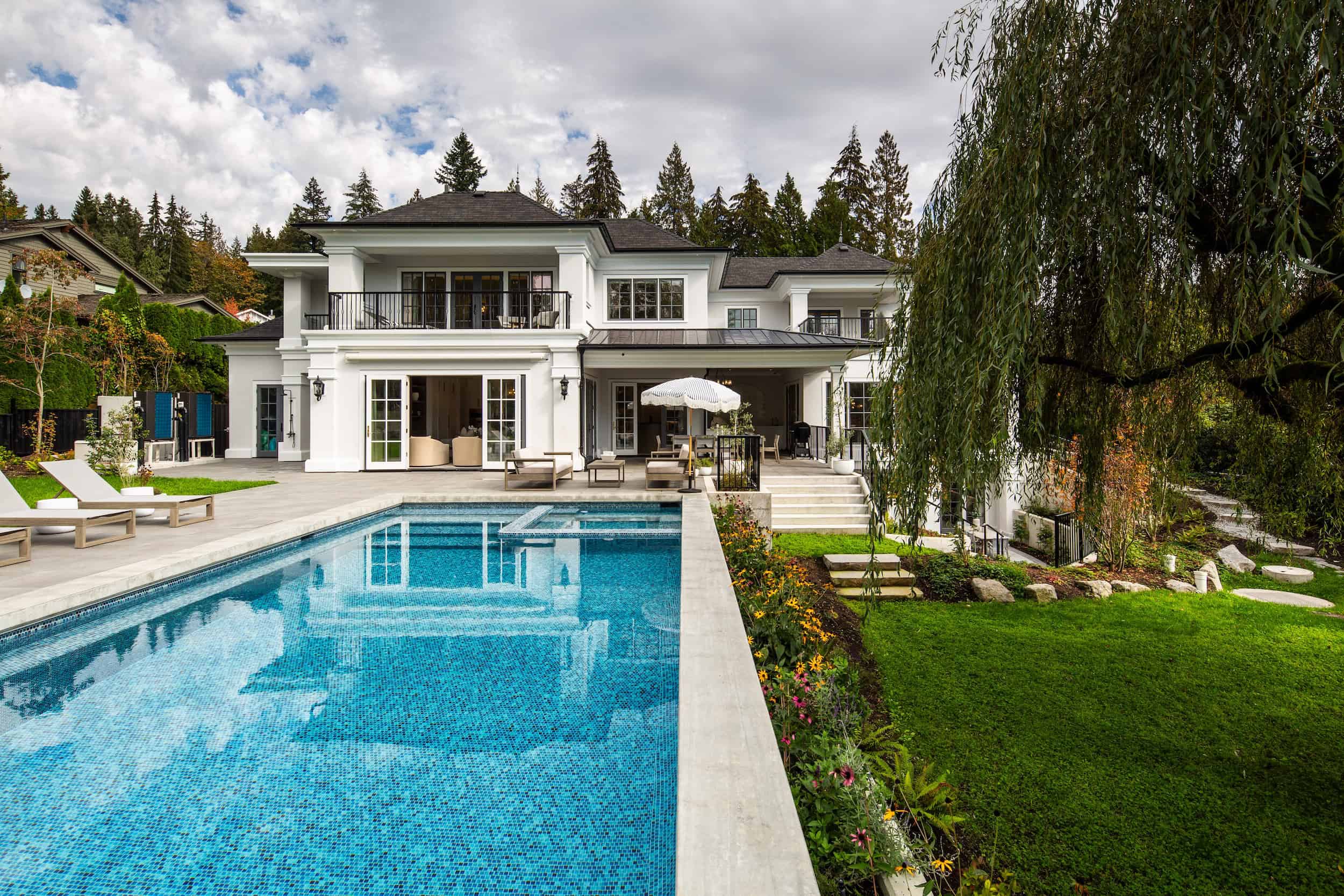
The builder-client relationship is a working partnership
Luxury construction involves prolonged contact. Even a well-run project can take many months, and complex renovations or heritage restorations may involve extended design, permitting, investigation, procurement, and construction phases. The client will interact with the builder through decisions that affect money, time, and emotion. Compatibility matters.
Look for directness. A builder who says yes to everything in the first meeting may feel reassuring, but experienced clients know that indiscriminate agreement is risky. The better answer is often nuanced: yes, that can be done, but it affects schedule; yes, that detail is possible, but it needs early shop drawings; no, that product is not suitable for this exposure; no, we should not close that wall until the moisture issue is understood.
Documentation is part of trust. Meeting notes, updated budgets, schedules, change orders, shop drawing logs, and clear allowances reduce confusion. In a luxury project, informality can become expensive. A casual conversation about changing a stone supplier or adding integrated lighting can ripple through millwork, electrical, procurement, and installation. No one benefits when decisions live only in memory.
The best builders also manage the rhythm of client attention. They know when an owner needs to decide and when the team should quietly coordinate. They avoid drowning the client in minor site issues, yet they escalate meaningful choices before they become emergencies. That balance is a mark of professional maturity.
Evaluating names in the Vancouver market
Searches for phrases such as custom home builders in Vancouver BC, Vancouver luxury home renovations, or T. Jones Group Vancouver can return a mixture of businesses, service categories, and overlapping claims. A client should not assume that every company appearing in a related search performs the same kind of work. Some businesses in the broader restoration and renovation field focus on historic buildings. Others emphasize exterior repair, waterproofing, structural repairs, or maintenance for commercial, residential, institutional, homeowner association, or multifamily clients. Those services may be highly relevant to a particular project, but they must be matched to the exact role needed.
When a single firm appears connected to multiple categories, such as custom homes, property maintenance, real estate development, heritage work, or multi-family service, verification becomes essential. It is not enough to see familiar terminology. The client should request project examples, references, role descriptions, insurance confirmation, licensing context where applicable, and clarity on who will perform the work.
A well-prepared client can use the first interview to separate marketing from substance:

- Ask the firm to define its core business in one or two sentences.
- Request examples from the last few years that match your project type.
- Clarify whether the firm is acting as builder, construction manager, developer, maintenance provider, or specialist subcontractor.
- Confirm the individuals assigned to estimating, site supervision, and project management.
- Speak with past clients about communication, budgeting, schedule, deficiencies, and aftercare.
The goal is not to catch anyone out. It is to establish alignment before contracts, deposits, demolition, or design commitments make a change difficult.
Contracts, allowances, and the luxury finish trap
One of the most common budget problems in high-end residential work sits inside allowances. An allowance is not a fixed price. It is a placeholder for a selection not yet finalized. If the allowance assumes a modest plumbing package and the client later selects premium fixtures throughout, the budget moves. If the allowance for tile does not reflect large-format stone, slab shower walls, bookmatching, or intricate installation, the number will not survive contact with the design.
Luxury clients should insist that allowances reflect realistic taste. A low allowance can make an early estimate look attractive, but it does not make the home less expensive. It merely postpones the truth. This is especially important for kitchens, bathrooms, windows, doors, appliances, lighting, fireplaces, flooring, architectural hardware, millwork, landscape elements, and exterior cladding.
Contract structure also matters. Fixed-price contracts, cost-plus arrangements, and construction management models each distribute risk differently. A fixed price may provide comfort when drawings and selections are complete, but it can include contingencies for unknowns and may be strained by frequent changes. Cost-plus can be transparent and flexible, but it requires trust, reporting discipline, and cost control. Construction management can suit complex custom projects with early builder involvement, though the client must understand how fees, trade tendering, and approvals work.
There is no universally superior model. The right contract depends on project definition, risk tolerance, design completeness, market conditions, and the relationship between owner, architect, and builder. What matters is that the client understands the arrangement before work begins.
Site supervision is where promises become reality
A beautiful proposal cannot supervise a site. The superintendent or site lead is often the most important person the client never thought to interview. This individual coordinates trades, protects completed work, manages sequencing, catches errors, enforces standards, and keeps the project moving when weather, deliveries, inspections, and design clarifications collide.
In custom work, sequencing is particularly delicate. Rough-ins must anticipate millwork. Waterproofing must precede finishes. Structural steel must align with architectural intent. Mechanical systems must fit inside ceilings without compromising lighting plans. Exterior details must be resolved before cladding arrives. A missed coordination point can travel through the project like a crack in glass.
Clients should ask how often the site will be supervised, how trade quality is checked, how deficiencies are tracked, and how the builder protects the property. On renovations, dust control, temporary weather protection, neighbour relations, and site cleanliness are not minor niceties. They affect safety, reputation, and the owner’s confidence.
A luxury home should not feel improvised. Even when field adjustments are necessary, they should be made within a controlled process.
Aftercare separates builders from project sellers
The relationship should not end abruptly at occupancy. New and renovated homes need tuning. Mechanical systems require balancing. Doors and millwork may need adjustment as humidity changes. Exterior drainage should be observed through real weather. Owners need manuals, warranties, finish schedules, maintenance guidance, and a clear process for deficiencies.

This is where property maintenance thinking returns. A builder who cares about the home after handover will provide documentation and realistic advice. They will explain what the owner should inspect seasonally, what needs professional service, and which materials require special care. For complex luxury homes, a maintenance calendar can be as valuable as a glossy photo package.
Some owners prefer to retain ongoing service support, particularly for homes with extensive exterior assemblies, specialty finishes, sophisticated mechanical systems, or seasonal occupancy. Others have property managers or estate staff. Either way, the builder should leave behind enough information for the home to be cared for intelligently.
A custom home is not complete when the last trade leaves. It is complete when the owner can live in it with confidence.
A refined decision is a deliberate one
Choosing a Vancouver home builder calls for discernment. The city’s residential work spans new custom homes, Vancouver luxury home renovations, heritage restorations, exterior repair, property maintenance, real estate development, and multi-family service. These disciplines can complement one another, but they should not be blurred casually. The client’s task is to define the project clearly, then select the team whose evidence, people, process, and temperament suit that assignment.
The finest homes are rarely the result of speed or spectacle. They come from accurate listening, rigorous planning, honest budgeting, patient craft, and respect for the building long after handover. For a custom home client, that is the real luxury: not merely a beautiful residence, but a well-made one, suited to its site, its owner, and its future.
Address: #20 – 8690 Barnard Street, Vancouver, BC V6P 0N3, Canada
Phone: 604-506-1229
Website: https://tjonesgroup.com/
Email: [email protected]
Hours:
Monday: 8:00 AM - 5:00 PM
Tuesday: 8:00 AM - 5:00 PM
Wednesday: 8:00 AM - 5:00 PM
Thursday: 8:00 AM - 5:00 PM
Friday: 8:00 AM - 5:00 PM
Saturday: Closed
Sunday: Closed
Open-location code (plus code): 6V44+P8 Vancouver, British Columbia, Canada
Map/listing URL:
Socials:
https://www.instagram.com/tjonesgroup/
https://www.facebook.com/TheT.JonesGroup
https://www.houzz.com/professionals/home-builders/t-jones-group-inc-pfvwus-pf~381177860
The company also handles multi-family construction, home maintenance, and investment advisory for property owners who want a builder with both design coordination and construction experience.
With its office on Barnard Street in Vancouver, the business is positioned to support custom home and renovation projects across the city.
Public site pages emphasize clear communication, disciplined project management, and craftsmanship meant to hold long-term value rather than short-term fixes.
T. Jones Group collaborates closely with architects, interior designers, consultants, and trades from early planning through completion.
The brand presents more than four decades of family-led building experience in Vancouver’s residential market.
Homeowners planning a custom build, estate renovation, or heritage restoration can call 604-506-1229 or visit https://tjonesgroup.com/ to start a consultation.
The business also maintains a public Google listing that can be used as a map reference for the Vancouver office.
Popular Questions About T. Jones Group
What does T. Jones Group do?
T. Jones Group is a Vancouver builder focused on custom homes, renovations, and related residential construction services.
Does T. Jones Group only work on new custom homes?
No. The public services page also lists renovations, heritage restorations, multi-family projects, home maintenance, and investment advisory.
Where is T. Jones Group located?
The official contact page lists the office at #20 – 8690 Barnard Street, Vancouver, BC V6P 0N3.
Who leads T. Jones Group?
The team page identifies Cameron Jones as Principal and Managing Director, and Amanda Jones as Director of Client Experience and Brand Growth.
How does the company describe its process?
The public process page says projects begin with an initial consultation to understand the client’s vision, lifestyle, property, goals, budget, and timeline, followed by collaboration with architects and interior designers through completion.
Does T. Jones Group work on heritage restorations?
Yes. Heritage restorations are listed on the official services page as a distinct service area focused on preserving original character while improving structure, livability, and performance.
How can I contact T. Jones Group?
Call (604) 506-1229, email [email protected], visit https://tjonesgroup.com/, and follow https://www.instagram.com/tjonesgroup/, https://www.facebook.com/TheT.JonesGroup, and https://www.houzz.com/professionals/home-builders/t-jones-group-inc-pfvwus-pf~381177860.
Landmarks Near Vancouver, BC
Marpole: A major south Vancouver neighbourhood and a gateway from the airport into the city. If your project is in Marpole or nearby southwest Vancouver, T. Jones Group’s Barnard Street office is close by. Landmark link
Granville high street in Marpole: A walkable commercial stretch with shops, services, and neighbourhood activity along Granville Street. If your property is near Granville, the Vancouver office is well positioned for local custom home or renovation planning. Landmark link
Oak Park: A well-known community park near Oak Street and West 59th Avenue. If you live near Oak Park, T. Jones Group is a practical Vancouver option for custom home and renovation work. Landmark link
Fraser River Park: A recognizable riverfront park with boardwalk views along the Fraser. If your project is near the Fraser corridor, the company’s south Vancouver office gives you a nearby point of contact. Landmark link
Langara Golf Course: A familiar south Vancouver landmark with strong local recognition. If your home is near Langara or south-central Vancouver, T. Jones Group is a local builder to consider for custom residential work. Landmark link
Queen Elizabeth Park: Vancouver’s highest point and a common geographic anchor for central Vancouver. If your property is around central Vancouver, the company remains well placed for city-based projects. Landmark link
VanDusen Botanical Garden: A major west-side destination near Oak Street and West 37th Avenue. If your home is near Oak Street or west-side Vancouver corridors, the office is still nearby for planning and consultations. Landmark link
Vancouver International Airport (YVR): A practical regional marker for clients coming from the south side or traveling into Vancouver for project meetings. If you are near YVR or Sea Island connections, the office is easy to place within the south Vancouver area. Landmark link